

When most people think about weight loss, they think about food, exercise, calories, and the number on the scale. Hydration often gets pushed to the side. Yet the amount and types of fluids you consume can influence several everyday habits that make weight management easier or harder.
At HealthyOne Weight Loss, we believe lasting weight management is about more than following a temporary diet. Our approach focuses on personalized care, healthy nutrition, lifestyle changes, and practical support that can fit into real life. Hydration is one of those simple habits that can support the bigger picture.
Water is not a magic weight-loss solution. Drinking more water will not automatically cause body fat to disappear. However, staying properly hydrated can support normal body functions, make healthier beverage choices easier, and help you stay consistent with the habits that matter most.
Your body needs water every day. Fluids support normal digestion, circulation, temperature regulation, and many other essential functions, according to insights from the Mayo Clinic. When you are working toward weight loss, those basic needs do not disappear. In fact, building healthy routines around hydration can make it easier to maintain other lifestyle changes.
Think about your daily routine. You may be planning balanced meals, increasing your activity, watching portions, or working with our team on a personalized weight-loss plan. If you are also going through the day without enough fluids, you may feel tired, thirsty, or less prepared to stay active.
Hydration should therefore be viewed as part of your overall routine rather than a separate weight-loss trick.
One of the clearest connections between hydration and weight management is what you choose to drink.
Water contains no calories. Many other beverages can contain significant amounts of sugar and calories. Regular soda, sweet tea, flavored coffee drinks, energy drinks, and other sweetened beverages can add calories quickly, especially when consumed every day.
Replacing some of those drinks with water can be a simple way to reduce your overall calorie intake without changing the food on your plate.
This does not mean you have to eliminate every beverage you enjoy. Instead, become more intentional about your choices. If you normally order a large sugary drink with lunch, try water instead. If you drink sweetened beverages throughout the afternoon, keep a bottle of water nearby and see whether you can replace some of them.
Small changes become more meaningful when they are repeated consistently.
Drinking water with meals is a simple habit that can support a balanced weight-loss routine. Water adds no calories, and having a drink with a meal may contribute to a feeling of fullness for some people, as noted by WebMD.
The important point is that water should complement nutritious food, not replace it. A healthy weight-loss plan still needs adequate protein, vegetables, fruits, fiber, healthy fats, and other nutrients based on individual needs.
Our goal is to help patients develop eating patterns they can maintain. Drinking water alongside balanced meals is an easy habit to incorporate without making meals complicated. You can explore how we incorporate structured nutritional guidance into our programs by visiting our services section.
Hydration also matters for digestion. Your body uses fluids as part of the digestive process, and adequate fluid intake can help support normal bowel function.
This becomes particularly relevant when someone begins eating more fiber. Vegetables, fruits, beans, and whole grains can all be valuable parts of a healthy weight-loss plan. Increasing fiber is generally easier on the digestive system when fluid intake is also adequate, a guideline emphasized by the Cleveland Clinic.
If constipation, bloating, or other digestive problems persist, do not automatically assume that drinking more water is the answer. Persistent symptoms deserve appropriate medical attention. Our team can also help you consider your overall nutrition and lifestyle habits as part of a broader weight-management strategy.
Physical activity is an important part of many weight-loss plans, and hydration can help support your ability to stay active.
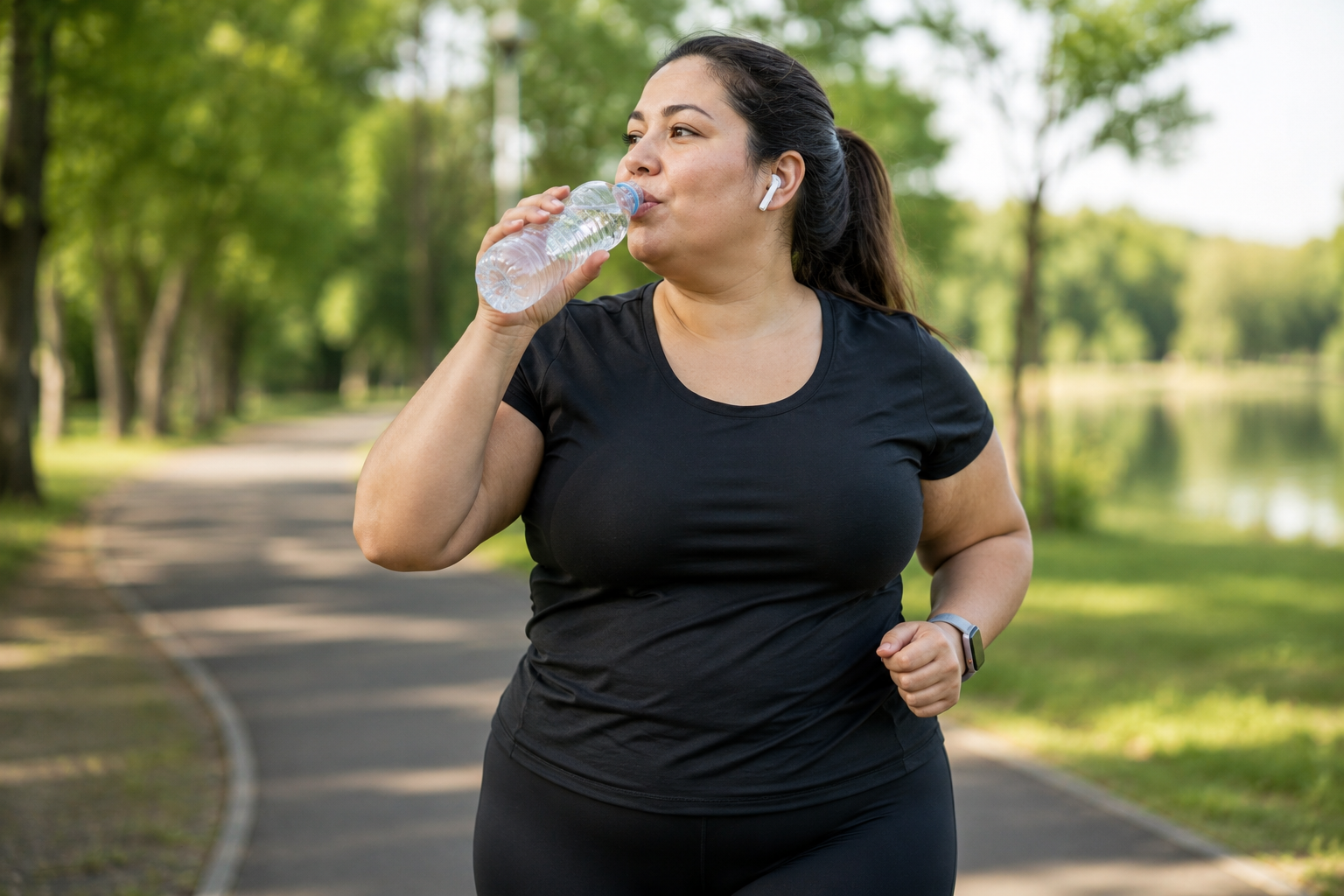
Your body loses fluid through sweat, especially during exercise or hot weather. If you are walking, strength training, cycling, swimming, or participating in another activity, having fluids available can be an important part of your routine.
You do not need to make hydration complicated. For many ordinary workouts and daily activities, water is a practical choice. Longer or more intense exercise, particularly in hot conditions, may require a more individualized approach.
There is no single amount of water that every person should drink.
Fluid needs can vary depending on body size, activity level, weather, diet, health, medications, and other individual factors. Some of the fluid your body receives also comes from foods and beverages other than plain water.
Rather than forcing yourself to follow an arbitrary number, pay attention to your body’s needs and discuss personalized recommendations with a qualified healthcare professional when appropriate.
Thirst can be one useful signal, although it should not be the only consideration. If you are exercising heavily, spending time outdoors in hot weather, or dealing with a health condition that affects fluid balance, your needs may be different.
It is important to avoid taking the hydration message too far. Drinking excessive amounts of water does not speed up weight loss, and consuming too much fluid can be dangerous.
The goal is appropriate hydration, not constant water consumption. You do not need to carry an enormous jug and force yourself to finish it simply because someone online claims that more water equals faster fat loss.
Healthy weight loss comes from a combination of sustainable behaviors. Hydration can support those behaviors, but it cannot replace nutritious food, physical activity, sleep, or appropriate medical guidance.
If you struggle to drink enough water, make the habit easier rather than relying on willpower.
Keep a reusable bottle near your desk, in your car, or wherever you spend most of your day. Drink a glass when you wake up and have water available with meals. Take a bottle with you when you leave home. If you exercise, bring fluids with you rather than waiting until you finish.
You can also make water more appealing. Add lemon, lime, cucumber, mint, or pieces of fruit for flavor. Unsweetened sparkling water can be another option if you prefer carbonation.
Another useful strategy is to connect hydration with habits you already have. Drink water when you start work, during a scheduled break, before leaving for an appointment, or after finishing a walk. For more healthy tips, browse through our latest articles on our blog.
This is one of the most important misconceptions to clear up.
Drinking water should not be described as a fat-burning treatment. Weight loss requires an overall energy balance that is influenced by food intake, activity, body composition, metabolism, and individual health factors.
Hydration can support the process indirectly. Choosing water instead of sugary beverages can reduce calorie intake. Staying hydrated can support normal physical activity and digestion. Creating a consistent water-drinking routine can also reinforce the broader habit of making intentional health choices.
Those benefits matter, but they are different from claiming that water itself melts away body fat.
At HealthyOne Weight Loss, we understand that every patient’s situation is different. Our website emphasizes personalized plans, expert guidance, nutritional counseling, fitness planning, and lifestyle support. Our program is doctor supervised and focuses on healthy diet and long-term weight-management goals.
That means hydration can be considered alongside the rest of your routine instead of being treated as an isolated solution.
We also believe weight loss should support overall wellness. Our approach is designed to help patients work toward healthier habits while receiving guidance throughout the process. Whether the focus is nutrition, activity, accountability, or other lifestyle changes, the goal is to create a plan that fits the individual.
Hydration is a good example of how a basic daily habit can become part of that bigger plan.
Does drinking water help with weight loss?
Water does not independently guarantee weight loss, but it can support weight-management efforts. Replacing high-calorie sugary beverages with water can reduce calorie intake, while drinking water regularly can support healthy daily routines.
How much water should I drink to lose weight?
There is no universal weight-loss water requirement. Your fluid needs depend on individual factors such as activity, environment, body size, diet, and health. A personalized recommendation is more useful than following an arbitrary amount.
Should I drink water before meals?
You can drink water before or with meals if it is comfortable for you. It may help some people feel more satisfied, but it should not be used to replace nutritious food or intentionally skip meals.
Can I drink coffee while trying to lose weight?
Yes. Coffee can fit into a weight-loss plan. Pay attention to added sugar, syrups, cream, and other ingredients that can substantially increase calories.
Is flavored water okay?
Yes, especially when it helps you choose water instead of a high-calorie beverage. Check labels on flavored products because some contain added sugars or significant calories.
Can drinking too much water be harmful?
Yes. Excessive water intake can disrupt the body’s fluid and electrolyte balance. More water is not automatically better, so hydration should be appropriate for your needs.
What if I do not like plain water?
Try adding natural flavor such as lemon, lime, cucumber, mint, or fruit. Unsweetened sparkling water can also provide variety while keeping your beverage routine simple.
Hydration may seem like a small detail when you are focused on losing weight, but consistent habits matter. Drinking water regularly can help you replace unnecessary liquid calories, support digestion, complement physical activity, and build a more intentional daily routine.
At the same time, water is not a shortcut. You do not need to drink extreme amounts, and you should not expect hydration alone to produce significant fat loss. The most effective approach is to combine appropriate hydration with nutritious eating, regular movement, healthy lifestyle habits, and individualized guidance.
Our team at HealthyOne Weight Loss is committed to helping patients take a personalized approach to weight management. We provide doctor-supervised care and practical guidance designed around individual goals and needs. Our focus is not simply on a number on the scale, but on helping patients build healthier habits that can support long-term progress.
If you are ready to take the next step, we invite you to connect with our team and learn how our personalized weight-loss services can fit your goals.
HealthyOne Weight Loss
📍 1100 West Royalton Road, Suite H, Broadview Heights, Ohio 44147
📞 (440) 230-1113
🌐 healthyoneweightloss.com
Your weight-loss journey can begin with simple habits you repeat every day. Hydration can be one of those habits. Simple changes, repeated consistently, can turn healthy intentions into lasting routines daily.