

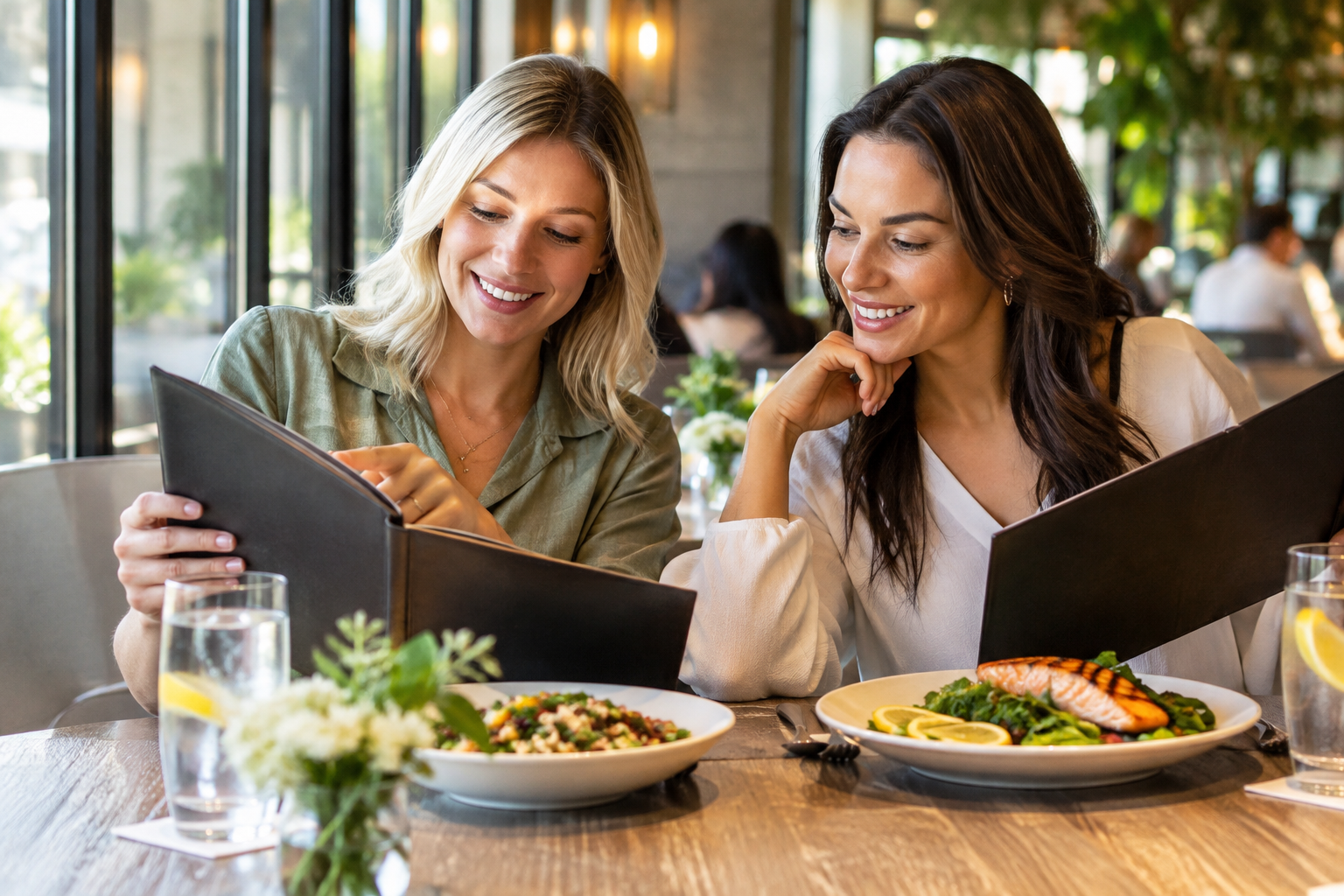
Eating healthy does not have to mean avoiding restaurants, skipping social events, or bringing a container of food everywhere you go. Dining out can be part of a balanced lifestyle when you know how to make practical choices before, during, and after your meal.
At HealthyOne Weight Loss, we focus on helping patients develop realistic habits that can continue beyond a structured weight-loss program. Our doctor-supervised approach emphasizes real food, personalized guidance, and lifestyle changes rather than relying on prepackaged foods or extreme approaches.
That matters because healthy eating needs to work in the real world. Restaurants, family gatherings, business lunches, birthdays, vacations, and spontaneous dinners are all part of life. The goal is not perfection. The goal is learning how to make choices that support your health while still allowing you to enjoy the experience.
Restaurant meals can be challenging for several reasons. Portions are often larger than what you might serve yourself at home, and meals may contain more added fats, sauces, sodium, sugar, or refined carbohydrates than expected. Drinks, appetizers, desserts, and extras can also turn an otherwise reasonable meal into something much heavier.
There is another challenge that has nothing to do with nutrition labels: decisions are often made when you are already hungry.
When you arrive at a restaurant extremely hungry, it becomes easier to order whatever sounds most satisfying in the moment. That does not mean you lack discipline. It means your environment, hunger level, and available choices influence your decisions.
A better strategy is to make healthy eating easier before you sit down.
One of the simplest strategies is to avoid letting yourself become excessively hungry before dining out.
Skipping meals throughout the day because you know you have dinner plans can backfire. You may arrive at the restaurant feeling so hungry that portion control becomes much more difficult. According to guidance from the Mayo Clinic, managing hunger cues throughout the day prevents overeating during social dining occasions.
Instead, maintain a reasonably consistent eating routine. A balanced meal earlier in the day can help you approach dinner with a more manageable appetite.
If you need something between meals, choose a practical snack that provides nutrition and helps control hunger. Depending on your individual needs, options might include vegetables, fruit, yogurt, or another protein-containing food.
Healthy eating is easier when you are making decisions from a place of normal hunger rather than desperation.
Planning ahead can make restaurant decisions significantly easier.
Many restaurants publish their menus online. Looking at the menu before arriving gives you time to consider your options without the pressure of hungry decision-making.
Look for meals that include lean protein, vegetables, whole grains, beans, or other nutrient-dense ingredients. Pay attention to how foods are prepared as well. Grilled, baked, roasted, steamed, or broiled options may give you more control than heavily fried or breaded choices.
You do not have to find the “perfect” meal. Simply identify a few reasonable options before you arrive.
This approach also supports the kind of practical nutrition education we emphasize at HealthyOne Weight Loss. Our nutrition approach is built around learning how to shop for, prepare, and eat real food rather than depending on prepackaged meals.
When possible, start by considering the main components of your meal.
Protein can help make a meal more satisfying, while vegetables provide important nutrients and can add volume and variety. A meal built around these foods can make it easier to manage portions of higher-calorie ingredients.
For example, instead of automatically choosing a large pasta entrée with a rich sauce, consider grilled chicken or fish with vegetables and a smaller portion of pasta or another carbohydrate.
At another restaurant, you might choose a burger with a side salad instead of automatically adding fries and a sugary drink.
The point is not to eliminate carbohydrates or other foods. It is to create a meal with balance.
Restaurant portions can be considerably larger than the amount you actually need.
One practical solution is to divide your meal before you begin eating. You can set aside part of the entrée to take home or share it with someone else.
Another strategy is to order a smaller portion when the restaurant provides that option.
Eating slowly can also help. Give yourself time to notice when you are becoming satisfied instead of treating an empty plate as the signal that you are finished.
You do not have to clean the plate simply because the food is there.
Learning appropriate portions is one of the most useful skills you can develop for long-term weight management because it applies whether you are eating at home or ordering from a restaurant.
Sometimes the main meal is not the biggest issue. The extras can add up quickly.
Consider appetizers, creamy sauces, dressings, cheese, butter, fried toppings, bread baskets, desserts, and high-calorie beverages.
You do not have to avoid all of them. Instead, decide which extras are most important to you.
For example, if you really enjoy dessert, you might choose a lighter entrée and skip an appetizer. If you want an appetizer, you might share it with the table.
This is an important distinction: healthy eating does not require saying “no” to everything you enjoy. It requires making intentional choices about what is worth including.
Restaurants are accustomed to accommodating reasonable requests.
You might ask for dressing or sauce on the side, vegetables instead of fries, grilled preparation instead of fried, or a smaller portion when available.
You can also ask questions about ingredients when you are uncertain.
Do not be embarrassed to ask. Knowing what is in your meal allows you to make a more informed decision.
At the same time, do not become so focused on modifying every detail that dining out becomes stressful. Choose the changes that provide the greatest benefit and keep the experience enjoyable.
Drinks can have a major impact on a meal without creating the same feeling of fullness as solid food. Insights shared via WebMD highlight how liquid calories can sneakily derail daily energy balance.
Water is a simple choice. Unsweetened beverages can also work depending on your preferences and nutritional needs.
If you choose a higher-calorie drink, recognize that it is part of your meal rather than something separate from it.
Alcohol can also contribute calories and may make it easier to make impulsive food choices. If you drink, moderation and awareness are important.
The goal is not to make every beverage choice perfect. It is to understand how drinks fit into your overall eating pattern.
Eating quickly can make it harder to recognize when you are becoming satisfied.
Restaurant meals can encourage fast eating because there may be conversation, distractions, or pressure to keep up with everyone else at the table.
Try putting your fork down occasionally and taking a moment between bites. Enjoy the food and the conversation.
Eating more slowly does not require a complicated technique. It simply gives you more opportunities to notice your body’s signals.
This can be especially helpful when restaurant portions are larger than what you would normally serve yourself.
This is one of the most important habits for sustainable weight management.
Suppose you go out for dinner and eat more than planned. That meal does not erase your progress.
The mistake would be deciding that you have already “messed up” and continuing the same pattern for the rest of the weekend.
Instead, return to your normal routine at the next meal.
There is no need to starve yourself the following day, skip meals, or attempt to compensate with extreme exercise.
One meal is one meal.
Consistency over time matters much more than perfection at every individual sitting.
Healthy eating needs to leave room for real life.
You may have days when your meals are extremely nutritious and days when circumstances make that more difficult. A birthday dinner, vacation, work event, or family celebration does not have to become a failure.
Instead of asking, “Was this meal perfect?” ask, “Did most of my choices support my goals?”
That shift can make healthy eating much more sustainable. Recommendations from the Cleveland Clinic emphasize adopting flexible, sustainable eating patterns rather than rigid dietary restrictions.
We believe long-term weight management is about focused lifestyle changes that can become part of everyday life. Our programs are designed around personalized plans, guidance, and habits that fit individual needs rather than treating every patient exactly the same.
Every meal can teach you something.
Maybe you notice that a particular restaurant leaves you feeling overly full. Maybe you discover that ordering sauce on the side makes a big difference. Perhaps you realize that eating a small meal earlier in the day helps you make better dinner choices.
Pay attention to those patterns.
The goal is not to keep a perfect food diary for the rest of your life. The goal is to understand which decisions help you feel satisfied, energized, and consistent with your weight-management goals.
Over time, these lessons can make dining out much easier.
There is no single restaurant strategy that works perfectly for everyone.
Your food preferences, lifestyle, activity level, health history, nutritional needs, and weight-management goals all matter.
That is why personalized guidance can be valuable. At HealthyOne Weight Loss, our programs emphasize individualized plans and ongoing support. Our nutrition services focus on helping people develop practical eating habits based on their specific needs rather than following a generic diet.
Dining out should fit into that bigger picture.
You do not need to order the same meal as another person simply because they are following a particular diet. You need to understand what works for you and learn how to apply those principles in different environments.
Can I eat at restaurants while trying to lose weight?
Yes. Restaurant meals can fit into a weight-loss plan. Focus on reasonable portions, balanced meals, nutrient-dense foods, and choices that support your individual plan.
Should I skip breakfast or lunch if I know I am eating out later?
Usually, deliberately skipping meals can make it harder to manage hunger later. Maintaining a consistent eating routine can make it easier to approach a restaurant meal with a normal appetite.
What should I order at a restaurant?
Look for meals that include protein, vegetables, and appropriate portions of carbohydrates or other foods that fit your nutritional needs. Grilled, baked, roasted, or steamed preparations can be practical choices.
Do I have to give up dessert?
No. Healthy eating does not require eliminating every food you enjoy. Consider sharing dessert, ordering a smaller portion, or balancing it with your other choices.
What if I overeat at a restaurant?
Return to your normal routine at the next meal. Avoid extreme restriction or punishment. One meal does not determine your overall progress.
Can HealthyOne Weight Loss help me develop better eating habits?
Our doctor-supervised weight-loss approach includes personalized guidance and a focus on real-food nutrition and sustainable lifestyle changes.
Eating healthy while dining out is not about avoiding restaurants or trying to control every detail of every meal. It is about developing practical skills that allow you to make better choices in real-life situations.
Plan ahead when possible. Do not arrive extremely hungry. Build meals around nutritious foods, pay attention to portions, watch the extras, choose beverages thoughtfully, and slow down while eating. Most importantly, avoid the all-or-nothing mindset.
A successful weight-loss lifestyle has to work outside the kitchen. It needs to work at restaurants, family gatherings, vacations, celebrations, and busy weekdays.
At HealthyOne Weight Loss, our goal is to help patients understand how to make healthier choices and build habits that can continue long after the initial phase of weight loss. Our doctor-supervised, personalized approach focuses on sustainable lifestyle changes and real-food nutrition rather than dangerous supplements or dependence on prepackaged foods.
If you are ready to take a more practical approach to weight management, our team is here to help you create a plan that fits your goals, preferences, and everyday life.
Healthy eating does not have to mean giving up your social life. With the right strategies and personalized support, you can learn how to make better choices wherever you eat.
Our team at HealthyOne Weight Loss provides personalized, doctor-supervised weight-loss guidance designed to help patients develop healthier habits and work toward lasting results.
📍 Address: 1100 West Royalton Road, Suite H, Broadview Heights, Ohio 44147
📞 Phone: (440) 230-1113
🌐 Website: healthyoneweightloss.com
Take the next step toward a healthier relationship with food and a weight-management plan that fits your real life. Contact us today to schedule a consultation and learn how our personalized services can support your goals.